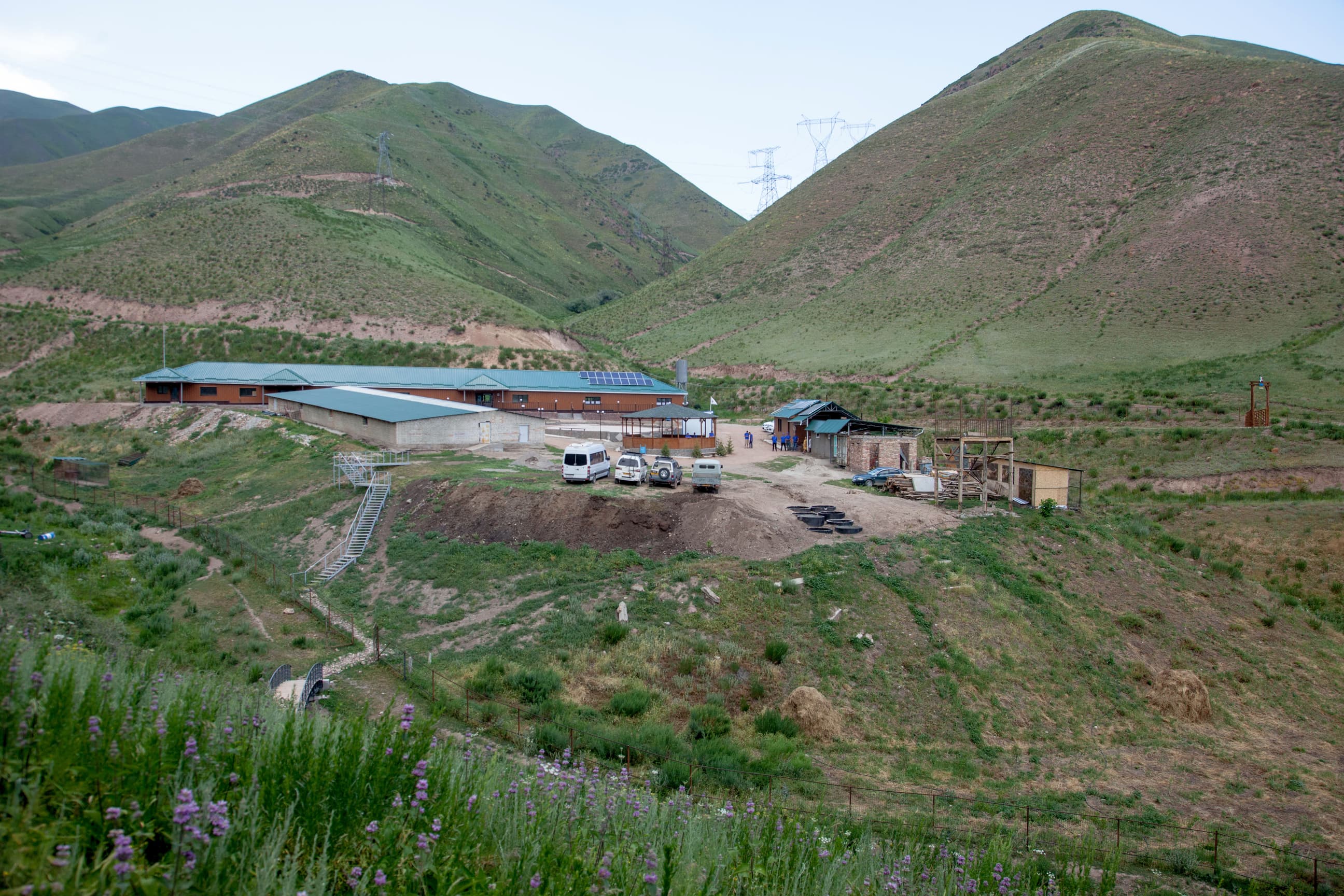
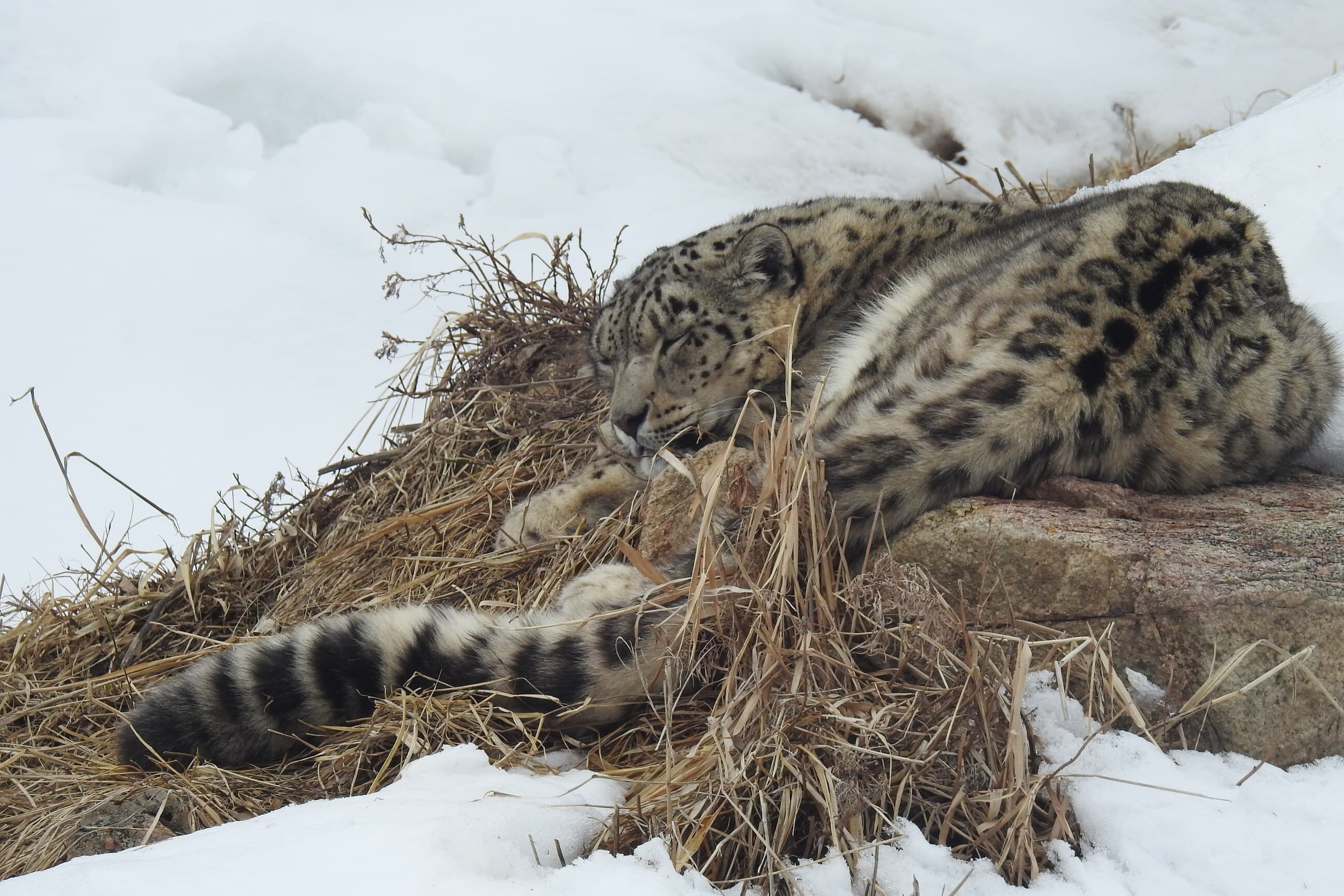
In the high mountains of Kyrgyzstan, NABU operates the world’s largest open-air enclosure for snow leopards. The connected rehabilitation centre helps injured, weakened or formerly captive wild animals and – wherever possible – prepares them for a return to the wild. Snow leopards, which are usually permanently dependent on care or can no longer be released, are provided with a safe environment and species-appropriate support.
The centre is located in the village of Suluu-Terek in the Chui region, around a three-hour drive east of Bishkek. The location is deliberately chosen: short distances for rescue operations, natural conditions for care and observation, and good transport connections for all staff, rangers, veterinarians and authorities. The surroundings also provide habitat for many wild animals, enabling releases directly on site.
In Kyrgyzstan there are few zoos and museums, and environmental education in schools is still rare. For this reason, the rehabilitation centre also serves as a place of environmental education: school classes learn about local wildlife, and information materials are prepared for the wider public. University students from several Kyrgyz universities regularly visit the centre during excursions and practical training projects. Since 2024 there has also been an official cooperation agreement with the Kyrgyz Ministry of Education.
The new NABU rehabilitation centre was opened in 2022 and replaced the first centre, which had been operated for around 20 years several hours further east near Ananyevo.
In addition to the new rehabilitation centre, NABU operates another environmental education facility in the Kara-Kujur valley of the project region. Here, NABU Kyrgyzstan offers children and young people from surrounding villages insights into local conservation activities and environmental education seminars.
Successes of the centre
Over 100 animals released into the wild
Since their establishment, staff at our rehabilitation centres have rescued, cared for and returned numerous wild animals to their natural habitats. Every successful release is an important contribution to protecting biodiversity in Central Asia. Only animals that are seriously injured and cannot survive in the wild – this is typically the case for snow leopards – remain permanently under NABU’s care.
Since 2004, more than 100 wild animals have been successfully rehabilitated and released back into the wild at the two NABU centres in Kyrgyzstan. Each release is a small but significant success for species conservation in the country’s mountain regions. In total, 108 animals have been released so far (as of November 2025) – including 87 birds of prey and owls, six lynx, three wolves, two roe deer and several other smaller wild animal species such as foxes and wildcats.
Most animals cared for at the centre are birds of prey – including eagles, buzzards, falcons and kites. They receive medical treatment after injuries or illegal capture and then train their flight ability in large aviaries. After recovering, they return to the mountains and steppes of the country.
Release versus permanent care
Mammals such as lynx and wolves have also been successfully released after intensive care. Rehabilitation is particularly complex for lynx because they are solitary and shy animals that rely on intact hunting instincts.
Animals without a chance of survival in the wild remain permanently under NABU’s care or in other suitable facilities – such as Wolf Dirk featured here, or the snow leopards introduced in the next section, who today serve as ambassadors for their species. In general, releasing young snow leopards that were caught at an early age, did not learn to hunt from their mothers and have been fed by humans for some time is considered too risky – and has never been attempted.
In addition to hands-on wildlife care, the rehabilitation centre is now also a key part of national environmental education work. Through cooperation with universities and authorities, workshops and volunteer activities are regularly organised – for example on World Environment Day or during joint environmental campaigns with students. National media also report regularly on the centre’s work, helping to raise awareness of wildlife protection and NABU’s engagement in Kyrgyzstan: more than 300 media publications in TV, radio, print and online have been documented as of November 2025.
Integrated actions are key to success
The centre’s successes show how veterinary care, research and nature conservation come together. Working closely with the anti-poaching unit “Gruppa Bars” and Kyrgyz wildlife veterinarians, NABU helps injured animals get a second chance and contributes to protecting biodiversity in Central Asia.
“Gruppa Bars” (German: “Snow Leopard Group”) operates on behalf of NABU to combat poaching effectively. They follow up on every poaching report, check fur traders at markets and search the mountains for traps. The rangers mainly work in northern and southern Kyrgyzstan.
Facilities of the new rehab center
Baktybek Azhybekov is the veterinarian of the centre and responsible for the medical care of all animal patients. As the facility includes a veterinary station with an operating room, he can react quickly and carry out almost all medical procedures himself. The centre consists of a main building and aviaries for wild birds. Behind them, set on green slopes, are the vast open-air enclosures for snow leopards and other wildlife.
These are the current residents of the rehabilitation centre
Status: November 2025
Several animals of different species currently live at the NABU rehabilitation centre in Kyrgyzstan. Their stories show how important committed local species conservation truly is.
Snow leopard Kolijuchka
Snow leopard Kolijuchka was born at the rehabilitation centre in 2009. As she has never lived in the wild, she does not know how to hunt and is so accustomed to humans that she cannot be released. Kolijuchka is a calm animal. She allows the centre’s staff to approach her, especially when they bring food. Strangers, however, are not allowed near her. The name Kolijuchka means “Little Prickle”.
Snow leopard Ak-Moor
Snow leopard Ak-Moor was brought to the centre in January 2020 by staff from the anti-poaching unit “Gruppa Bars”. Ak-Moor is an older female that had broken into a chicken coop and attempted to kill livestock. Already weak and with three damaged canine teeth, she failed. Wildlife rangers handed the snow leopard over to NABU because she would not survive in the wild. Ak-Moor behaves shyly and in an untamed manner around people.
Lynx Leopold
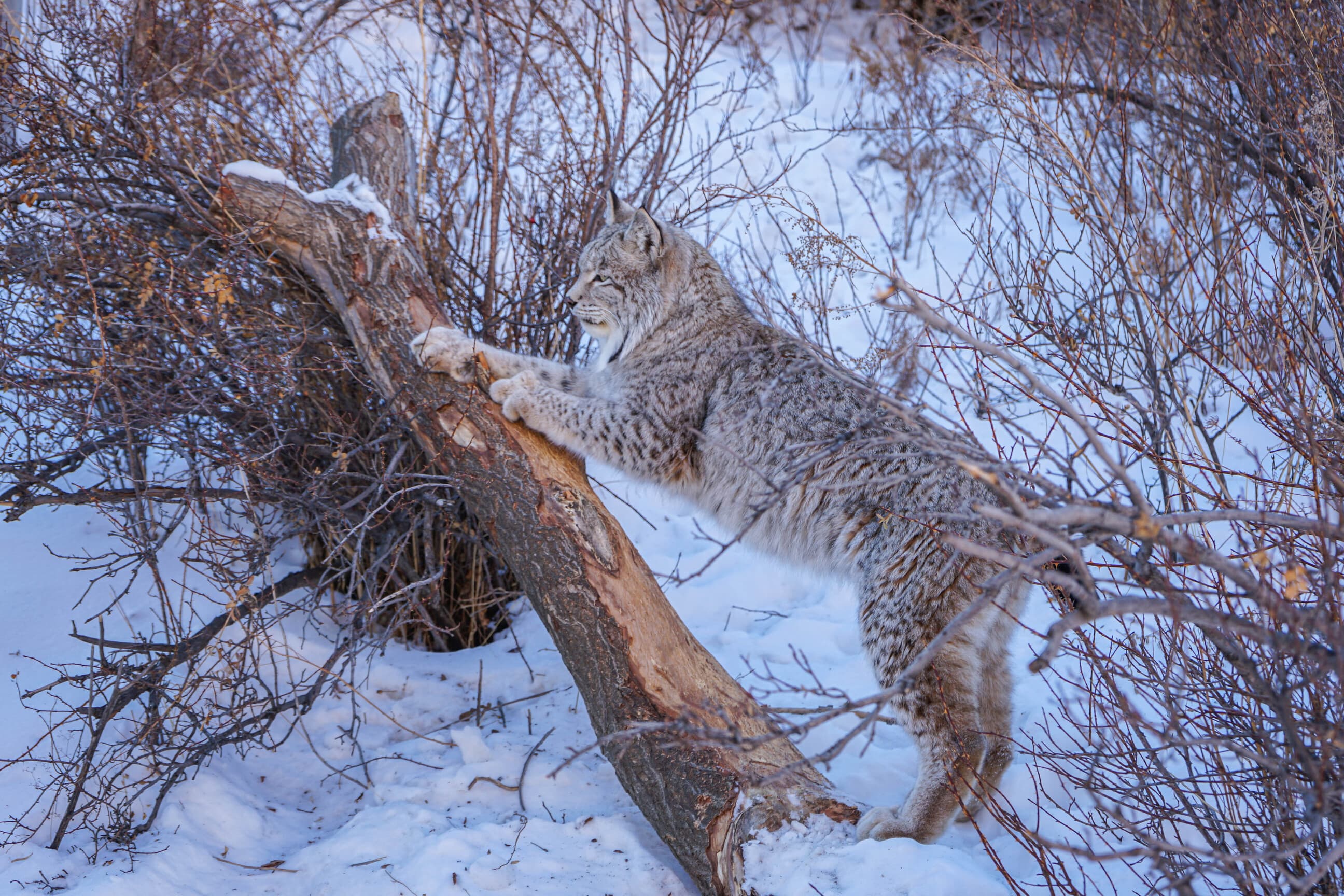
Lynx Leopold was confiscated together with two other lynx by the state environmental inspectorate in the Osh region in 2012. The officers brought the animals to the NABU rehabilitation centre, where two of the lynx were released after 1.5 years of rehabilitation. Because Leopold had become completely tame, he remains permanently under NABU’s care. He is sociable, playful and purrs a lot.
Birds of prey almost constantly occupy the centre’s aviaries. Currently (as of November 2025), buzzards and an eagle are housed here and are being prepared for release depending on their health condition.
Additional bird species native to Kyrgyzstan include falcons, kites, harriers, hawks, vultures and various owl species.
“Roe Doe”, the roe deer (yet unnamed). In the village of Shaidan-Sai (Nooken district), this young deer was discovered by wildlife specialists in August 2024 and brought to the rehabilitation centre a month later by staff from NABU’s partner organisation Gruppa Bars. The animal was weak and frightened but could be stabilised with professional care. It is now being raised carefully so that it can hopefully be released into the wild in the future.
History of our rehabilitation center
NABU has been committed to protecting snow leopards in Central Asia for many years. The first rehabilitation centre opened in 2002 and remained in operation until 2021, an impressive 20 years. It was located near the village of Ananyevo on the northern shore of Lake Issyk-Kul in the Yssykköl region, around 250 kilometres east of Bishkek. In close proximity to the Issyk-Kul Biosphere Reserve, the site offered favourable climatic conditions and access to the snow leopard’s mountain habitat.
Many injured animals were cared for there, such as the Bagira family shown below. However, the spatial conditions soon reached their limits. With the support of Kyrgyz partner organisations and many donors, the new facility in Suluu-Terek was built and opened in 2022. The new centre offers larger enclosures, modern veterinary care and more space for environmental education programmes - and better transport access for staff and visitors alike.